Around 300 BCE, when the two cultures were getting along, China introduced rice cultivation to Japan and it quickly became a mainstay of the Japanese diet. Sake, made from fermented rice, naturally followed. People not only drank it but offered it to their Shinto gods out of respect and to ensure protection and a good harvest. The deities were always served the best of the batch. Even today, Shinto shrines throughout Japan have barrels of sake displayed as offerings.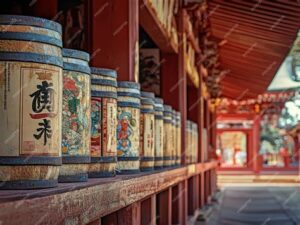
Because of the many microclimates throughout the country, every locality brewed their own unique version. Over the centuries those varieties were developed into distinctive brands – up to 20,000 of them! Hard to imagine being able to tell the difference between that many sakes, but maybe if you practiced tasting them long enough…
Local sake in Japan is called jizake and specific brewing recipes vary, but all sake shares the same basic process of combining steamed rice, water, a mold called koji, and yeast.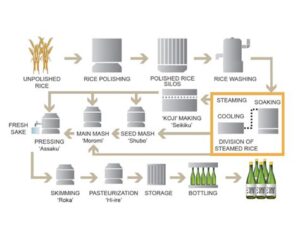 Similar to beer and wine production, the starch of the rice must be converted to sugar (cue the koji!), which, when yeast is added, begins the fermentation process, called shikomi. Flavors are often added with the koji, or at a later stage. Initial fermentation takes one to two months; after that, the sake is pressed, pasteurized, filtered and bottled. Then it’s aged, which, depending on the type, can take six months to a year.
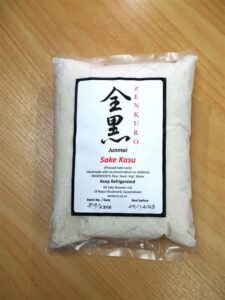 Happily, the process creates very little waste because the pasty stuff left over after the pressing, called sake kasu, is about six to eight percent alcohol and tastes like, well, sake. It’s used in cooking, making drinks like amazake, flavoring pickles, creating skin care products, and as a nutritious, savory marinade.
I’m not sure I could this early in my education, but there definitely is a difference. Ginjo-shu, or premium sake, is based on various factors (outlined below), while non-premium, or table sake, called “futsu-shu,” has less restrictions.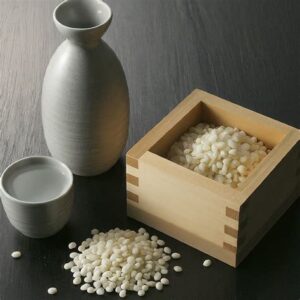
The difference begins with the rice itself. Amazingly, there are more than nine hundred varieties of rice, and roughly ten percent of those are considered “sake” rice, which is larger, more porous and less protein-rich than table rice (which can be used for table sake, unlike premium sake).
Besides the rice, rice “polishing” (removing the outer layer) is crucial because the amount removed will determine whether a sake is lighter or more full-bodied (generally speaking, the more it’s polished, the lighter the flavor). Once again, premium sake must adhere to certain polishing levels for the type of sake being produced, but table sake is not restricted in that way.
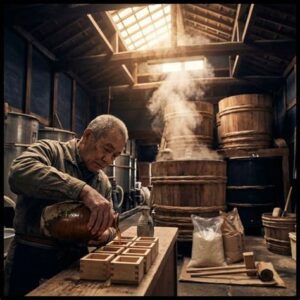 The type of water, koji, and yeast can all determine the quality of a given sake, not to mention the land and climate that grew the rice. Perhaps the most important factor is the brewmaster’s expertise. Debate rages on about which sake is better than another, but I’d stick with the adage that whatever tastes best to you is best!
The short answer is aroma, color and taste. Premium sake, for instance, is known for its fruity aroma (think apples, bananas, melon) based on the type of yeast used and the amount of rice polishing involved. “Mature” sake, on the other hand, will have a more earthy aroma.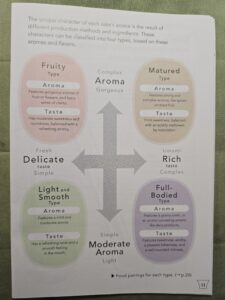
Not all sake is colorless; sometimes there’s a slight hue based on the pressing or filtering process. Sake that’s been aged for a long while will also turn a golden color. As for taste, take your pick: sweet, dry, rich, light, and degree of “body” are benchmarks. The difference in flavor depends on balancing sugar, acidity, alcohol and amino acids.
Sake is closely tied to Japanese history, culture and tradition; drinking it symbolizes cleansing and starting fresh. As a result, there are many occasions in which it plays an important role. 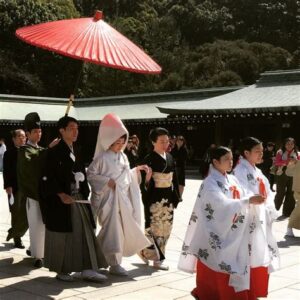 For example, at a traditional Japanese wedding, the bride and the groom share three cups of sake. They each take three sips in turn from each cup to seal their bond as a married couple. Sake’s also served to welcome new members to a group at work or in private social settings. Moreover, drinking sake together is one of the few times when social caste or status is set aside: when drinking the sacred brew, everyone around the table is considered equal.
The traditional saki decanter is called a tokkuri and has been around for thousands of years. Here’s a hand-painted version from around 1900.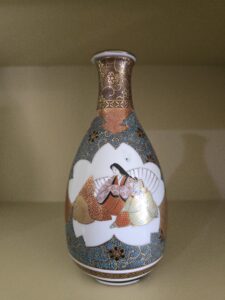
The companion cup for drinking is called a choko. These cups can be made of material ranging from ceramics to wood to tin. Even wine glasses are used, because they hold the aroma of the sake like they do wine. 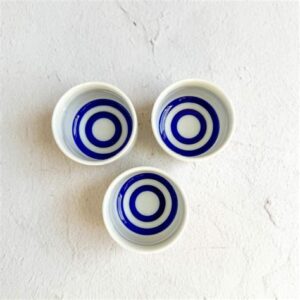 If you ever experience a sake competition, you’ll see the judges using kiki-choko, which are cups with a bull’s eye pattern inside. They check the color of the sake on the white part and the cloudiness on the blue ring.
Sake can be enjoyed at various temperatures, from chilled to hot. 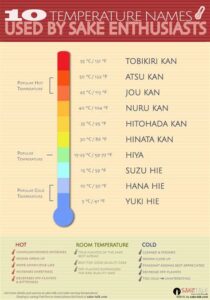 Japanese connoisseurs have assigned names to each of ten different heat levels and know which temperature brings out which characteristics of the sake, such as aroma and flavor. The best way to heat sake is to put the decanter in a pot of hot water and let the heat transfer to the sake inside. Heating the brew directly would burn off the alcohol as well as the taste–what’s the point of that?
As you would expect, sake goes well with Japanese cuisine like sushi, sashimi, fried and fatty fish and the ever-popular ramen (the latter is often drunk with Hanjozo sake, which has a bit more alcohol).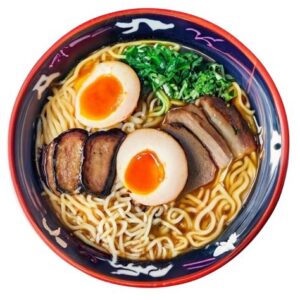 Supposedly, it tastes great chilled with BBQ and works with veggie dishes and pizza, too! The real surprise is that sake also pairs well with milk chocolate (try a creamier sake) and dark chocolate, which tastes better with lighter sake. Once again, it’s up to your unique tastebuds as to which sake works with which dishes. Time to channel your inner “Bill Nye the Science Guy” and experiment!
Alas, yes. Just like any alcoholic beverage, you can get drunk on sake. In fact, at between fifteen and twenty percent ABV (alcohol by volume), it outpaces wine (ten to fourteen percent ABV) and certainly beer, which is only about three to nine per cent ABV. However, sake can’t compete with most distilled spirits; whiskey, for example, is at least forty percent ABV.
Like most wine (and whiskey, for that matter), sake is for sipping, not guzzling. To keep the party going without the dreaded consequences, you should drink yawaragi mizu, which is essentially a water chaser equal to the sake you’re imbibing. Drinking premium sake will help, as well as drinking it warm, because you’re more likely to sip a warm beverage. Don’t mix with the wrong kind of food or other types of liquor and you should be good to go. But if you do happen to overindulge, some experts (undoubtedly sake vendors) say that because there is less acid and other additives in sake than wine, your hangover might not be as bad as a wine bender. If you’d like to undertake an experiment along those lines, please let me know how you feel the next day!
As with all types of alcohol, the cost of sake varies widely with quality (or at least perceived quality).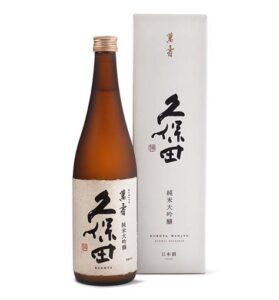 Price is also based on production costs (e.g., rice polishing technique). A bottle of well-regarded premium sake in Japan, like Kubota Manju Junmai Daiginjo, might cost around thirty dollars (based on current exchange rates), but could cost four times as much once it’s imported to the U.S. No wonder sake breweries are opening up statewide!
 The jury’s out on that. It’s been part of a holistic approach to healing for centuries, but modern scientific methods haven’t been applied to that claim to any great degree. It’s not that fattening (134 calories for 3.5 ounces) and current studies claim that generally, a glass of alcohol a day (for women) can be beneficial. Another benefit: traditional sake is gluten-free, although you’ll have to check the label for additives in some brands.
Could knocking back a glass of sake help with digestion? Maybe. Help you sleep? Maybe. No promises here; best to see what, if anything, works for you, keeping in mind moderation in all things.