World Building:
It’s Not Just for Sci-Fi and Fantasy Fiction
“World Building” is a writing term you hear most often in relation to the science fiction and fantasy genres. It’s the process of creating the universe in which your characters live and the plot unfolds. Every aspect of life has to be created: the physical setting, the culture, the economy, even the people themselves. In some respects, it’s liberating because in those genres, you can decree anything you like, such as green dogs with three heads or gelatinous orbs in which the protagonist can time travel.
When writing historical fiction, you must do much of the same kind of world building, except you’re limited to what the world was like at the time in which you’ve set your story. Sometimes the historical world seems totally alien to us and it takes a fair amount of imagination to bring it back to a time and place we can relate to.
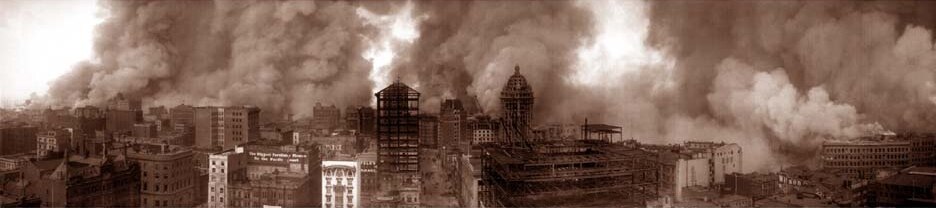
Both my historical fiction and mystery series take place in turn of the twentieth century San Francisco, roughly a hundred and twenty years ago. The city, which boomed through the discovery of gold and was nearly decimated by the earthquake and fire of 1906, was rebuilt quickly to regain the moniker “Golden City,” a phrase I used to name my historical fiction series.
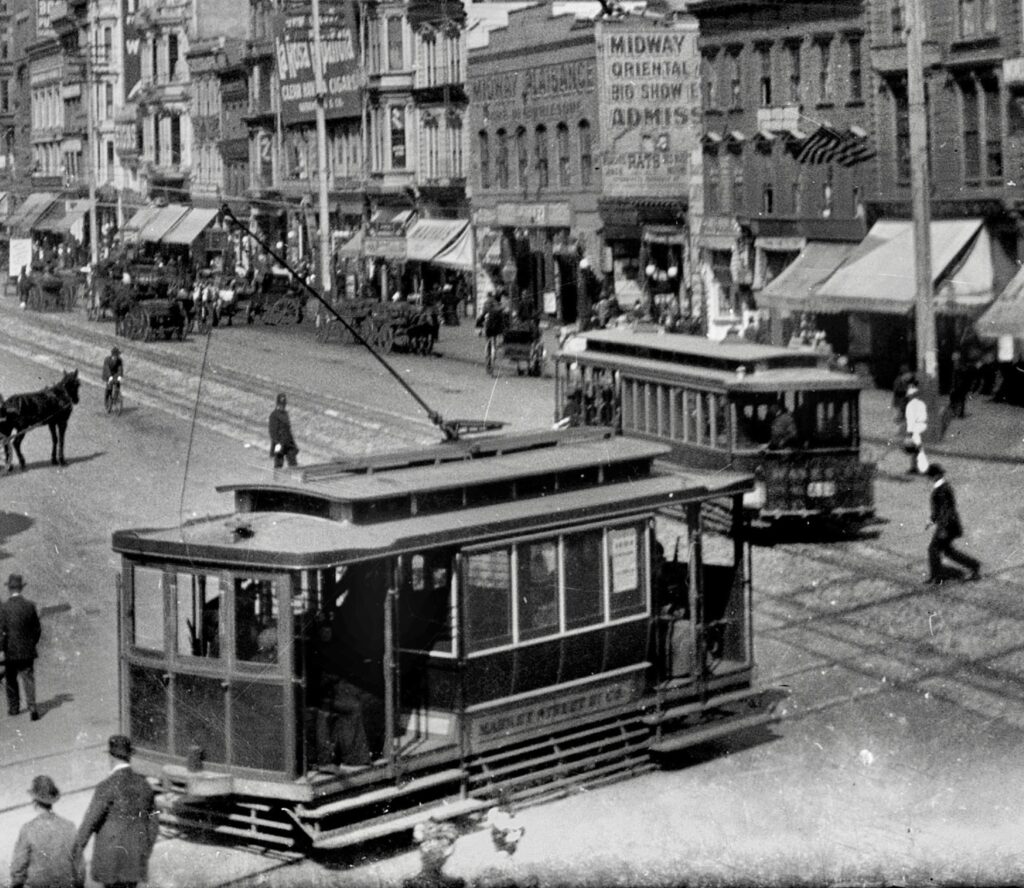
Since that’s my chosen time period, I’ve had to recreate a world in which cars are a novelty and refrigerators as we know them don’t exist. Only one in eight residents have a telephone, and calls require a switchboard whose operators were at one time teenage boys who often slept during the night shift! Elevators are rare, but one, at the famed Palace Hotel, has a “rising room” so large it contains a couch and other furnishings. Getting from downtown San Francisco to San Rafael (a city north of the Golden Gate Bridge), takes about an hour today (based on traffic, of course!). For my characters, however, it can take an entire day, especially if they miss their connections to the trolley car, ferryboat, train and buckboard. The Golden Gate Bridge? It doesn’t exist.
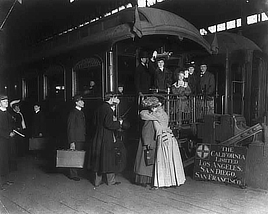
Sustained, controlled flight has just been achieved by the Wright Brothers in North Carolina, but on the West Coast, the optimal mode of long-range transport is either by train (within the continental United States) or ship. San Francisco Bay provides a magnificent port for goods and people traveling from all over the world, especially southern China, which brings the immigrants who play such an important role in the city’s development.
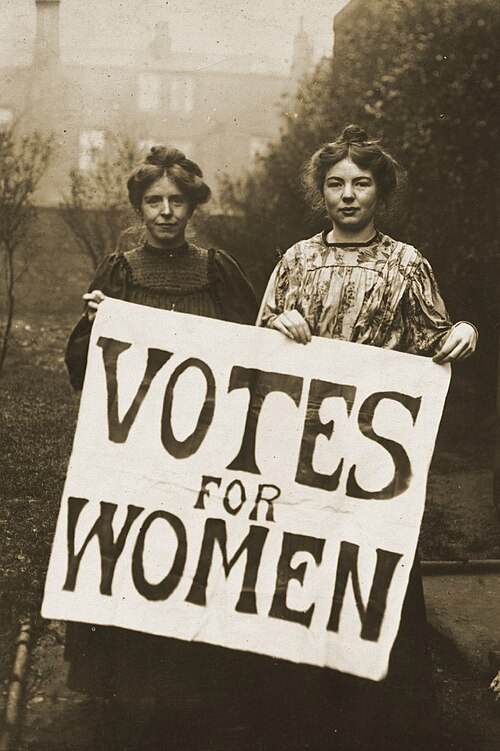
In my historical world, women did not have the vote, did not serve on juries, and were only just beginning to enter fields dominated by men. The latter fact provides a wonderful opportunity to highlight such trail blazers, including my five-foot four, but “take no prisoners” associate attorney, Cordelia Hammersmith. I do love having her spar with her male counterparts!
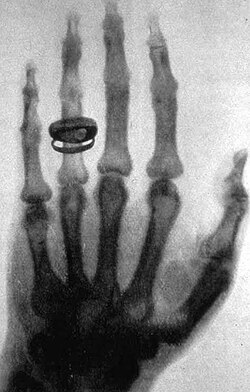
One of the starkest differences between the time of my novels and now is in the field of medicine. The most significant breakthrough of the modern era had not yet been developed: antibiotics. Germ theory and eradicating pathogens through rigorous cleaning were still controversial. And X rays — commonly used today as a frontline diagnostic tool, were in their infancy. In my world, you did not want to have a serious accident or contract syphilis, require an abortion or come down with a life-threatening disease – it was a veritable death sentence.
Around 1900, the Bubonic Plague reached San Francisco via the rats who hitched rides on sailing ships. At the time, no one realized the real culprits were the fleas the rats carried. A Covid-like quarantine and forced vaccination program took place, primarily in Chinatown. It didn’t stop the spread, but it did lead to even more fear and dread of the immigrant population. That distrust was misguided because when the scourge returned after the 1906 earthquake (thanks to so much rat-loving rubble) it bypassed Chinatown altogether.

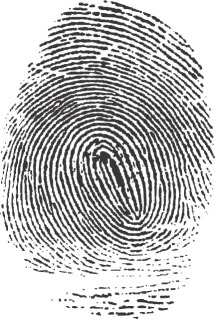
Mysteries, of course, most often involve crimes, and showing how law enforcement professionals or investigators back then solved those crimes presents challenges we don’t face today. My protagonist, for instance, can’t use fingerprints as evidence – they weren’t used in crime scene investigations in San Francisco until 1909. Photographs of crime scenes weren’t common, either; they were considered by many to be disrespectful of the deceased.
Forensic ballistics were anecdotal if used at all. Rifling, in which bullets pass through a gun barrel’s unique grooves, had been invented, but there was no database of various gun manufacturers that could be used to match spent cartridge cases to particular weapons.
And poisons, some of which had been used without detection for centuries, weren’t systematically studied by toxicologists in crime detection until World War I. That makes it a lot tougher for my sleuths to figure out “whodunnit.” They have to rely on quirky physical clues, such as an engraver’s mark, a dropped cheroot, or a rope tied in an unusual way.
Sadly, people have been harming others through various means –and trying to get away with it–since time immemorial. Whether the crime fighters use AI and lasers, or nothing more than intuition and logic, it’s our job as mystery authors to make their story believable for the time and place in which they live—and to do that, we’ve got to build their world from the ground up. This essay was originally published in the Mystery Readers Journal, Northern California II edition. January 2026. For information about subscribing to the journal, please go to mysteryreaders.org.