 The protagonist of my historical mystery series “Barrister Perris” is a trial attorney (who in England is referred to as a “barrister”). I’m not a lawyer and no, I don’t even play one on TV. So, to make sure I don’t make any felonious faux pas when I’m describing legal scenes, I’ve immersed myself in the study of law. Now and again, I’ll share some of the more interesting aspects of our legal system as I learn about them. (Those of you with legal backgrounds, feel free to correct me – I always want to be as accurate as possible!).
The first concept is the difference between English common law and “civil law,” which uses the Napoleonic Code.
 No doubt the most important difference between English common law and Napoleonic civil law is the very foundation upon which judicial decisions are based.
Under civil law, judges render their verdicts according to the written codes and statutes that have been imposed upon their jurisdiction. They already know the rules of the game and base their decisions on whether or not the defendant has broken those rules.
Under common law, however, judges interpret rulings made by previous judges and (most often) follow the precedents set by those who came before.
Why do common law judges rely so heavily on other judges’ rulings? It relates in part to the method of reasoning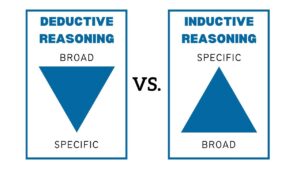 they use. Napoleonic civil law follows the process known as “deductive” reasoning, in which a general rule exists and from that rule, the decision about a specific case is made. Conversely, English common law uses “inductive” reasoning, which means a new general principle or rule can be created from a specific set of circumstances.
 Using deductive reasoning, for example, a general rule might be “Taking items from a grocery store without paying is stealing.” Joe Smith stole from the grocery store; therefore, the judge determines that Joe is guilty of stealing. The circumstances have been applied to the rule.
Now apply inductive reasoning to the same circumstance: Maybe Joe Smith ran inside the nearest store, grabbed some bandages and ran back outside to staunch the bleeding of someone who had been stabbed outside on the street. Technically he stole the bandages, yet because Joe was being a Good Samaritan, the judge might decide that he should not be considered a thief and therefore renders a new judgment based on the facts of that particular case.
Down the road, when a similar case pops up elsewhere, the new judge will look to see what the earlier judge had to say about the matter. Over time, such precedent turns into a massive amount of what’s called “case law.” It evolves along with society and is used to render most judges’ current decisions. In legal terms, the reliance on past decisions is called “Stare decisis,” which is Latin for “To rely on things decided.”